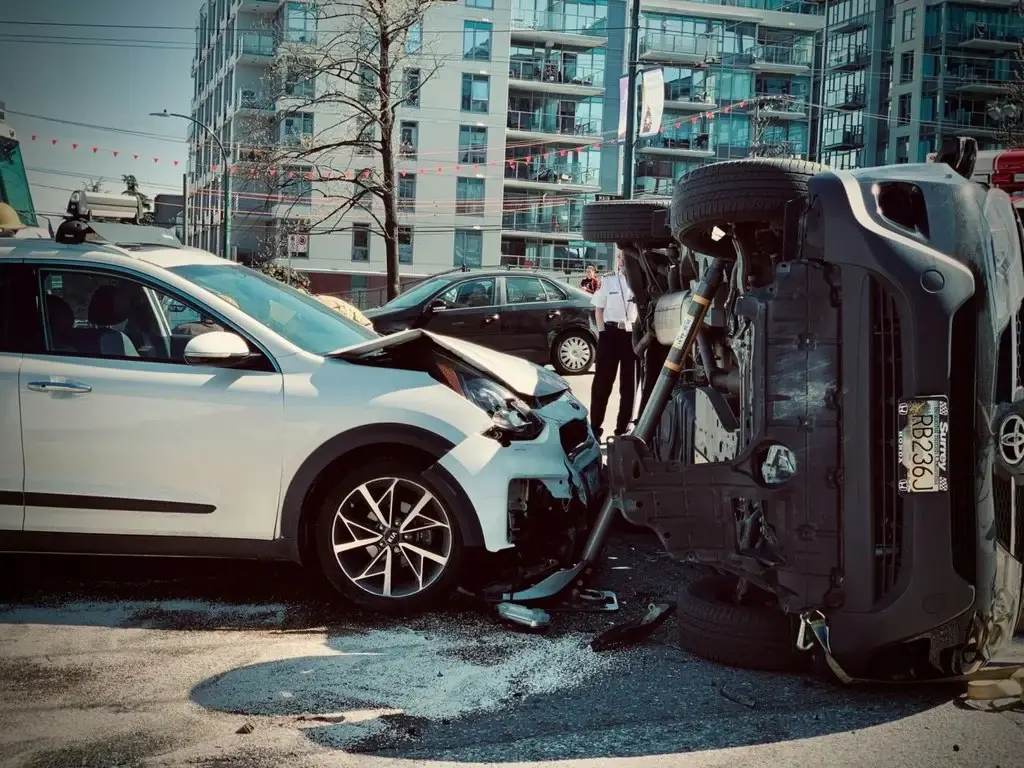
A car accident can leave you feeling stressed and unsure about what to do next. Even a relatively minor collision can result in bumper damage, dents, scratches, damaged panels or problems that are not immediately visible. Knowing what steps to take can make the situation easier to manage and help you arrange the right repairs.
If your vehicle has been involved in a collision, this guide explains what to do after the accident, how insurance repairs work, what to look for in a repair centre and how to decide whether your vehicle needs minor repairs or more extensive work.
1. Make Sure Everyone Is Safe First
The first priority after any road accident is safety.
If anyone is injured or there is an immediate danger, contact the emergency services. If it is safe to do so, move to a safer location and switch on your hazard warning lights.
The Highway Code states that drivers involved in a collision causing damage or injury must stop and provide relevant details when reasonably required. If you do not provide your details at the scene, the accident must be reported to the police as soon as reasonably practicable and within 24 hours.
Do not put yourself or passengers at risk simply to inspect damage. If the vehicle or surrounding road is unsafe, stay away from traffic and seek appropriate assistance.
2. Exchange the Necessary Details
If it is safe and appropriate, exchange details with the other driver.
You should obtain information such as:
- Name and address
- Vehicle registration number
- Insurance details
- Contact information
- Details of any witnesses
GOV.UK states that if an accident causes damage or injury, you must provide your name, address and vehicle registration number to anyone with reasonable grounds for requesting them. You should also report the accident to your insurer, even if you do not intend to make a claim.
Avoid arguing about who was responsible at the scene. Concentrate on recording accurate information and dealing with the situation safely.
3. Take Photos of the Damage
If conditions are safe, take photographs of the vehicles and surrounding area before repairs are arranged.
Try to capture:
- Front and rear of the vehicle
- Damaged panels
- Bumper damage
- Scratches and paint damage
- Dents
- Broken lights or other visible components
- The overall position of the vehicles
Take several photographs from different angles. Close-up photographs show the damage, while wider photographs can provide useful context.
These records can be useful when discussing the damage with your insurer or repair centre.
4. Contact Your Insurance Company
You should notify your insurer about the accident according to the requirements of your policy. GOV.UK confirms that drivers must report an accident to their insurance company even when they are not planning to make a claim.
Before agreeing to any repair arrangement, check your policy carefully.
Important questions include:
- Do you have comprehensive or third-party cover?
- What is your excess?
- Does your policy provide a courtesy car?
- Does the insurer have a network of approved repairers?
- What documentation do they require?
Third-party insurance is the legal minimum for driving in the UK, but it does not normally cover repairs to your own vehicle. The level of cover available for your vehicle depends on your specific policy.
5. Get the Vehicle Properly Assessed
Visible damage does not always tell the complete story.
A bumper might look scratched on the outside while internal components have also been affected. Similarly, a dented panel may have damage around its mounting points that is difficult to see without closer inspection.
A professional assessment helps determine whether the vehicle needs:
- Scratch repair
- Dent repair
- Bumper repair
- Panel repair
- Panel replacement
- Paintwork
- Structural or mechanical attention
For Car Accident Repair Birmingham, getting a proper assessment before authorising extensive work can help you understand exactly what needs to be repaired.
6. Understand the Different Types of Accident Damage
Not every collision requires the same repair process.
Scratches and Paint Damage
A minor collision can leave scratches, scuffs or paint transfer. Depending on their depth, these may require polishing, preparation or repainting.
Professional car scratch repair Birmingham services can assess whether the damage is superficial or has gone through the paint layers.
Dents and Damaged Panels
A dent may sometimes be repaired without replacing the entire panel. The appropriate approach depends on its size, depth, location and the condition of the surrounding paint.
For more serious damage, the panel may need extensive bodywork or replacement.
Bumper Damage
Bumpers are commonly affected during low-speed collisions. Damage can range from scratches and cracks to more significant deformation.
A technician should assess whether the bumper can be repaired safely or whether replacement is more appropriate.
7. How Insurance Car Repairs Work
The process for insurance car repairs Birmingham can vary depending on your policy and the circumstances of the accident.
Your insurer may arrange an assessment and provide information about its repair process. Some policies involve approved repair networks, while other arrangements may differ.
Do not assume that every policy works in exactly the same way. Check your own policy and ask your insurer what steps you need to follow.
If you are asked to use a particular repairer, understand what that means for your claim and whether you have any options under your policy.
The Association of British Insurers’ consumer guidance has also noted that repair arrangements and policy rights can vary, so checking the terms of your own insurance is important.
8. Choosing an Accident Repair Centre in Birmingham
Choosing the right car body shop Birmingham drivers can rely on involves more than comparing the cheapest quotation.
Look for a repair centre that:
- Has experience with accident damage
- Clearly explains the proposed repairs
- Provides a detailed quotation
- Has genuine customer reviews
- Can show examples of previous work
- Handles the type of repair your vehicle requires
- Communicates clearly throughout the process
Local businesses offering accident repair vary considerably in size and service, so it is worth checking their current information, customer feedback and specific capabilities before booking.
A good repair centre should be comfortable explaining why particular work is required.
9. How Much Does Accident Repair Cost?
There is no standard price for accident damage repair Birmingham because the cost depends on the extent of the damage.
The quotation may be affected by:
- Number of damaged panels
- Severity of the impact
- Parts requiring replacement
- Paint and colour matching
- Labour
- Surface preparation
- Bumper damage
- Additional damage discovered during inspection
A small scratch and a multi-panel collision are completely different repair jobs.
If you are paying privately, ask for a clear quotation before work begins. If the repair is being handled through insurance, make sure you understand the claim process, excess and any other financial responsibilities.
10. What If the Vehicle Is Declared a Write-Off?
Sometimes an insurer may decide that repairing a damaged vehicle is not economically appropriate.
GOV.UK explains that insurers decide whether a vehicle is written off and what they will pay. Some written-off vehicles can potentially be repaired depending on their category, while Category A and B vehicles cannot return to normal road use in the same way.
If your insurer says the vehicle is a total loss, ask them to explain the decision, the vehicle’s category and how the valuation has been calculated.
Do not assume that every damaged vehicle can or should be repaired simply because the damage appears cosmetic.
11. How Long Does Vehicle Accident Repair Take?
The repair time depends on the amount of damage and the work required.
A small scratch or dent may be repaired relatively quickly. More extensive vehicle accident repair involving multiple panels, replacement parts and paintwork can take longer.
Parts availability can also affect the schedule. If a replacement component needs to be ordered, the repair may take longer than initially expected.
A professional repair centre should be able to give you an estimated timeframe once the vehicle has been inspected.
12. Don’t Ignore Minor Accident Damage
It can be tempting to ignore a small dent or scratch if the vehicle remains driveable.
However, damaged paint can expose underlying surfaces to moisture and other environmental factors. Cracked bumpers, loose components or damaged lights can also become more serious concerns.
If you are unsure whether damage is purely cosmetic, have the vehicle checked rather than guessing.
13. Keep Records of the Repair
Keep copies of your:
- Insurance correspondence
- Claim reference
- Photographs
- Repair quotation
- Invoices
- Repair documentation
These records can be useful if you need to discuss the repair with your insurer later or need evidence of the work carried out.
A clear record can also be useful when selling the vehicle in the future, particularly where substantial repairs have been completed.
Why Choose a Professional Accident Repair Service?
After an accident, the goal should not simply be to make the damage look better. The repair should be appropriate for the condition of the vehicle and carried out using suitable repair methods.
An experienced repair team can assess the damage, explain the work required and help you understand the difference between repairing a panel, replacing a component and repainting an affected area.
For Car Accident Repair Birmingham, St Paul Auto Repairs provides scratch repairs, dent repairs, accident and insurance repairs, paintwork and full respray services for vehicles requiring professional bodywork attention.
Frequently Asked Questions
1. Do I have to report a car accident to my insurance company?
Yes. GOV.UK states that you must report the accident to your insurance company even if you do not intend to make a claim. Your policy may also contain specific reporting requirements, so check your terms.
2. Can I choose my own accident repair centre?
This depends on your insurance policy and the circumstances of your claim. Check your policy and speak with your insurer before authorising repairs. Some insurance arrangements use approved repair networks, while other circumstances may provide different options.
3. How do I know if my car has hidden accident damage?
You cannot always identify hidden damage through a visual inspection. Damage behind bumpers, panels or other components may require professional assessment. If the collision was significant, have the vehicle properly inspected.
4. Can a dent be repaired without replacing the panel?
Sometimes. The answer depends on the size, depth, location and condition of the dent and paintwork. A technician should inspect the damage before recommending repair or replacement.
5. How long does accident repair take in Birmingham?
It depends on the extent of the damage, parts availability, paintwork and the repair process. A minor repair may be completed relatively quickly, while extensive accident damage can take considerably longer.
Final Thoughts
A car accident can be stressful, but taking the right steps afterwards can make the repair process much easier. Focus first on safety, exchange the necessary information, document the damage and contact your insurer when required.
Before choosing a repair centre, make sure you understand what work is required, what the quotation includes and how the insurance process will work.
For Car Accident Repair Birmingham, a professional vehicle assessment is a sensible starting point. It can help identify visible and potential hidden damage and give you a clearer understanding of the repairs your vehicle needs.